

12 min read
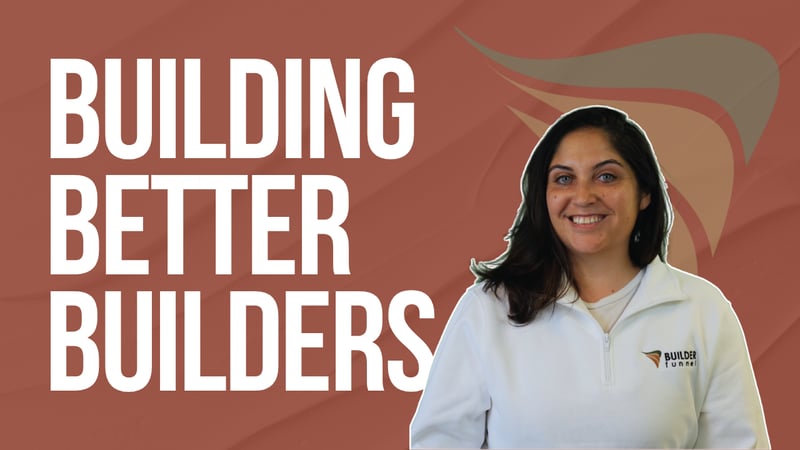
What happens when you're suddenly responsible for running a company, and nobody ever taught you how to run one?
Maybe you're taking over the construction business your parents spent decades building. Maybe you're an excellent remodeler who accidentally became the owner of a multimillion-dollar company. Or maybe you just got promoted, inherited a team, and discovered that managing people requires an entirely different set of skills. Welcome to leadership, where the learning curve is steep and the business doesn't stop running while you figure things out.
I know the feeling, because I lived it. When I joined Builder Funnel in 2015, I was an entry-level Inbound Marketing Specialist at a seven-person company, writing blogs, managing SEO, building emails, and spending an embarrassing amount of time trying to rank client projects on Houzz. I didn't know how to read a financial statement, and I certainly wasn't planning to become president.
Eleven years later, I'm leading a multimillion-dollar business with more than 40 employees across North America and over 100 clients. What changed? I learned how to lead, and I'm still learning. The good news is that becoming a better business leader comes down to a handful of learnable skills: making informed decisions, setting clear expectations, developing your people, and building systems that let the business run without you.
In the first episode of Building Better Builders, I share the mistakes and uncomfortable lessons that shaped my leadership philosophy, and I have some encouraging news: you can learn how to do this too.
Table of Contents
- How to Learn to Lead a Construction Business
- Leadership Lesson #1: High Standards Require High Support
- Leadership Lesson #2: Your Employees May Be Experiencing a Different Company Than You Think
- Leadership Lesson #3: Clarity Is Kindness, Even When the Conversation Is Uncomfortable
- Leadership Lesson #4: Growing a Business Means Making Good Decisions Without Perfect Information
- Leadership Lesson #5: Stop Being the Bottleneck in Your Own Business
- The Builder's Punch List: Three Questions to Become a Better Business Leader
- Build a Better Business by Becoming a Better Leader
- FAQs About Becoming a Better Business Leader
How to Learn to Lead a Construction Business
Nobody hands you a manual for running a growing company. You can study business in a classroom, learn from experienced leaders, and read every management book on the bestseller list. Eventually, though, you're going to have to make a decision you don't feel entirely qualified to make.
I've learned from books, podcasts, mentors, coaches, industry events, and other business owners. I've studied frameworks like EOS, Scaling Up, 4DX, Theory of Constraints, and the Great Game of Business, borrowing the ideas that worked for us and leaving behind those that didn't.
Learning to Lead Means Getting Comfortable With Being a Beginner
The most valuable lessons have come from putting that knowledge into practice, especially when things didn't go according to plan. For emerging leaders in construction, this can be particularly challenging. Maybe you're stepping into a family business where the previous generation has decades of experience you can't replicate overnight. You know they understand things you haven't encountered yet, but you can also recognize opportunities to improve systems, processes, and operations.
The trick is learning to respect the experience that built the company while developing the skills necessary to take it somewhere new. You can learn to understand financial statements, build effective teams, improve hiring, develop processes, and make strategic decisions. You won't master any of those skills immediately, and you'll occasionally get things wrong along the way.
You don't need decades of experience before you're allowed to contribute. You need the humility to recognize what you haven't learned yet and the willingness to make decisions before you've learned everything. No one's business ever waited for them to finish the book.
Leadership Lesson #1: High Standards Require High Support
Effective leadership combines clear performance expectations with the training, resources, and accountability employees need to meet them. I learned that the hard way, through one of my most uncomfortable leadership mistakes.
Years ago, we had a manager who was genuinely well-liked, but her team's performance was suffering. Deadlines slipped, client communication was inconsistent, and project management and accountability were falling short. Clients were leaving. Eventually, two of the manager's three teammates came to me independently, burned out, worried about losing more clients, and afraid their own jobs could be at risk.
We eventually made the difficult decision to let the manager go, and the turnaround was dramatic. Morale improved, client retention recovered, and the replacement manager earned enthusiastic feedback from clients and teammates. The team had one question: why did we wait so long? I realized I had confused compassion with avoidance.
Before You Blame an Employee, Examine the System
The popular advice to hire slowly and fire quickly makes for a catchy business slogan, but it leaves out an awful lot of important context. Sometimes an employee genuinely isn't meeting the requirements of the role. Other times, the company has failed to provide adequate support.
High Support Doesn't Mean Unlimited Chances
Providing high support doesn't mean lowering expectations or giving someone unlimited opportunities to miss them. In fact, the more seriously you take employee development, the more important accountability becomes. Employees deserve to know what successful performance looks like, where they're falling short, and what needs to change.
That includes specific expectations, appropriate resources, reasonable timelines for improvement, and a clear understanding of what happens if performance doesn't improve. Otherwise, you're putting everyone in an impossible position: the struggling employee doesn't know where they stand, their teammates keep absorbing the consequences, and leadership postpones a decision that may become more difficult with time.
I've learned that compassion and accountability are entirely compatible. You can care deeply about someone's success, invest in their development, and still recognize when a role or employment relationship isn't working.
Consider a construction project manager who's consistently missing deadlines. Before assuming they're the problem, investigate:
- Were deadlines and expectations clearly communicated?
- Did they receive enough training to succeed?
- Are they responsible for more projects than they can reasonably manage?
- Do they have authority to make the decisions their role requires?
- Is another person or department creating the delays?
- Have they received specific feedback and a reasonable opportunity to improve?
You may discover a performance issue that needs direct intervention, or you may uncover a broken process that's making an otherwise capable employee look incompetent. Both situations require leadership. My philosophy is to maintain high standards and provide high support: hold people accountable for results, but make sure the company has equipped them to succeed.
Leadership Lesson #2: Your Employees May Be Experiencing a Different Company Than You Think You're Running
Leaders need regular, candid feedback from employees to identify the gaps between their intentions and the organization's actual operations. One of my most influential leadership moments came during a particularly uncomfortable one-on-one meeting, where an employee spent nearly an hour explaining what wasn't working.
She challenged leadership decisions, questioned processes, described accountability problems, and revealed a very different employee experience from the one I believed we were providing. I listened instead of defending myself.
The Company You Think You're Running May Not Be the Company Your Employees Experience
What I discovered when I listened was not fun to digest. There was a significant gap between what leadership believed was happening and what our employees were actually experiencing. Three problems became particularly clear:
- Undocumented processes: There were procedures I thought existed, but we hadn't adequately explained or documented them.
- Unclear expectations: I assumed people understood what successful performance looked like, even though we hadn't consistently communicated those standards.
- Insufficient leadership training: I expected managers to handle situations the way I would, without recognizing that I'd never actually taught them how.
These weren't necessarily individual performance failures. They were gaps in how we were leading the company, and recognizing that changed the way I approached operational challenges.
Consider a hypothetical example from a construction company: your production team repeatedly fails to follow the sales handoff process, and your first instinct might be to demand better accountability. But what if nobody has documented the handoff? What if the sales and production teams have different definitions of a complete project file, or important selections routinely get finalized after construction begins? Before deciding that your employees are the problem, you need to understand whether you've given them a system that actually works.
How to Get Curious About Your Employees' Work Experience
Another accountability meeting won't fix a broken system, but listening and asking better questions often will. When employees aren't meeting expectations, I want to understand what they're experiencing before deciding what needs to change. That means comparing leadership's understanding of how something should work with what's actually happening in practice.
Here are five questions worth asking:
- What's the actual process? Can employees explain how the work is supposed to happen, or does everyone have a different interpretation?
- What expectations have we explicitly communicated? Are the standards documented and reinforced, or are we assuming people know what we want?
- What obstacles are employees encountering? Are they missing information, resources, training, or the authority to make decisions?
- Where does the process break down? Is the problem happening at a particular handoff, decision point, or stage of delivery?
- What are employees seeing that leadership isn't? What patterns or recurring frustrations might be invisible from the top?
These questions help distinguish individual performance issues from organizational problems. Sometimes you'll discover that someone needs clearer feedback or additional training; other times, you'll realize the process itself needs to change. Before committing to a solution, ask a deceptively simple question: are we solving the right problem? That question could save you from implementing an expensive solution to an entirely different issue.
Leadership Lesson #3: Clarity Is Kindness, Even When the Conversation Is Uncomfortable
Clear communication is one of the most important leadership responsibilities, because employees need to understand expectations, performance concerns, and the reasoning behind decisions. I used to dread difficult conversations, rehearsing feedback for days, reconsidering my wording, anticipating the employee's reaction, and then postponing the discussion when the opportunity finally arrived. Sound familiar?
Avoiding conflict can feel compassionate in the moment, but the employee keeps missing expectations without understanding what needs to change. Meanwhile, teammates absorb the consequences, resentment builds, and the eventual conversation becomes more difficult. Today, I operate with a much simpler philosophy: "Clarity is kindness."
How to Make Difficult Conversations More Productive
You don't have to become confrontational to become a more effective communicator. Start by making feedback specific, timely, and actionable. Imagine your remodeling company's lead carpenter regularly forgets to submit project updates. The difference between vague and clear feedback looks like this:
| Vague feedback | Clear feedback |
|---|---|
| "We really need everyone to communicate better." | "Project updates need to be submitted by 3 p.m. every Friday. When they're missing, our project manager doesn't have the information needed to update homeowners. What's getting in the way of meeting that deadline?" |
The clear version establishes a standard and opens a productive conversation about the obstacle. Clarity also requires repetition, because an expectation mentioned during onboarding six months ago isn't necessarily one employees understand and apply today. Communicate it, document it, reinforce it, and check whether the message landed. And when something changes, explain why.
Leadership Lesson #4: Growing a Business Means Making Good Decisions Without Perfect Information
Business growth depends on leaders who can evaluate available information, make sound decisions, measure the outcomes, and adjust when circumstances change.
The Year We Had to Decide Without a Safety Net
In 2025, we faced a series of significant challenges. We were reconsidering important aspects of our product-market fit, and changing our front-end offer created ripple effects through service delivery, processes, training, and employee responsibilities. At the same time, we had overhired, margins became extremely thin, and there were periods when the business operated in the red.
We had to make consequential decisions without knowing whether the changes would succeed. There was no guarantee the strategy would work and no future case study to reassure everyone. We had financial information, industry experience, and our team's collective judgment, and we had to keep making decisions. We finished 2025 with growth, although it looked different from what we'd originally envisioned. The experience reinforced an important principle: a company's ability to grow is limited by its leaders' ability to make good decisions.
What Does This Mean for Construction Business Owners?
Imagine your remodeling company wants to increase annual revenue. You might assume you need more leads, another salesperson, or additional project managers. Those investments could help, but what if your actual constraint is a slow estimating process that's preventing existing opportunities from moving forward? Adding more leads could make the bottleneck worse.
Before deciding where to invest, examine the business:
- Define the desired outcome. What measurable improvement are you trying to achieve?
- Understand your numbers. Where are opportunities being lost, delayed, or becoming unprofitable?
- Identify the constraint. What is currently preventing the business from achieving its goal?
- Choose the next action. What change is most likely to address that constraint?
- Evaluate and adapt. Did the decision produce the intended result? What should change next?
The goal is to make the best decision you can with the information available, then learn from the outcome. Waiting until every uncertainty disappears is a great way to never make a decision at all.
Leadership Lesson #5: Stop Being the Bottleneck in Your Own Business
A scalable business needs people who can make good decisions without requiring the owner's constant involvement, and this is one of my biggest ongoing leadership challenges. I love solving problems, developing systems, and finding ways to make the business work better, but those strengths can create an unfortunate side effect: people become dependent on me to solve everything.
The more valuable a leader becomes as the company's chief problem-solver, the harder it can be for everyone else to develop the same capability. It's a familiar situation for builders and remodelers. Does your construction company have an owner who must personally approve every material substitution, resolve every customer complaint, review every estimate, and make every hiring decision? Congratulations: you may have built yourself a very successful, very exhausting job.
Teach Employees to Bring Solutions, Not Just Problems
At Builder Funnel, I use a concept called the "six-inch putt." Instead of bringing leadership an unresolved problem and waiting for instructions, employees learn to evaluate the situation and recommend a solution. Here's how that changes the conversation:
| Bringing a problem | Bringing a solution (the six-inch putt) |
|---|---|
| "We have a problem with our project schedule. What should we do?" | "Our cabinet delivery is going to be delayed. I've reviewed the schedule and identified two options. I recommend moving the flooring work forward because it will reduce downtime without interfering with the remaining trades. Here's what I need approved." |
That second employee is developing judgment and taking ownership. Our Manager Development Program and Director Development Program help leaders understand the business's financials, margins, goals, constraints, and decision-making processes. The long-term goal is to build a company that makes increasingly good decisions without me needing to participate in every one, which is an essential step toward sustainable growth.
Your Company Culture Shows Up When You're Not in the Room
Culture is easy to describe in a mission statement, but it's much harder to build into everyday decisions. I've come to believe that one of the best ways to evaluate company culture is to look at what happens when leadership isn't available. Do employees have the context, confidence, and authority to make good decisions, or does everything grind to a halt until someone gets the owner's approval?
Ask yourself how your team would respond to these situations:
- A customer has a problem: Can employees identify an appropriate solution without escalating every concern?
- Something unexpected happens on a project: Does the team understand which decisions they can make independently and which require leadership approval?
- Someone notices an inefficient process: Do they feel empowered to recommend an improvement?
- An employee disagrees with leadership: Can they respectfully challenge a decision without worrying about the consequences?
- A manager encounters a new problem: Do they understand the company's priorities well enough to evaluate their options and recommend a solution?
A healthy company culture gives employees the information, skills, authority, and psychological safety to exercise good judgment. That takes deliberate training, consistent communication, and leaders who are willing to share responsibility. The goal is to build a company where good decisions happen because of the culture you've created, even when you're nowhere near the room.
The Builder's Punch List: Three Questions to Become a Better Business Leader
You don't need to overhaul your organization by Monday. In every episode of Building Better Builders, I share a practical Builder's Punch List you can apply to your business. Here are the three questions from Episode 1.
1. What Are You Building?
Think beyond the projects on your construction schedule and ask what kind of company you're trying to create. Do you want a business that can operate without your daily involvement, one that offers employees meaningful career opportunities, or a company known for delivering an exceptional customer experience? Once you've identified that vision, ask what kind of leader you'll need to become to achieve it.
2. What's in the Way?
Identify one area where you've become the bottleneck. Maybe you're the only person who can close a sale, approve a proposal, or resolve a scheduling conflict. What would need to change for someone else to handle that responsibility successfully? Consider the training, processes, information, and decision-making authority that might make delegation possible.
3. What's the Next Build?
Choose one leadership skill to develop next. It could be understanding your P&L, learning to give better feedback, improving your hiring process, or finally documenting the estimating system that's lived in your head for the last fifteen years. Choose one meaningful area of improvement and begin; you can tackle the next one afterward.
Build a Better Business by Becoming a Better Leader
Running a successful construction company requires an entirely different set of skills from building a beautiful home. As your business grows, you'll encounter new challenges involving finance, management, culture, systems, and strategy, and the solutions that worked when you had five employees may no longer work when you have 25. Just when you think you've figured it out, the next stage of growth introduces a fresh set of challenges.
That's why I created Building Better Builders. Through candid stories, practical frameworks, and lessons from more than a decade of growing Builder Funnel, I explore what it takes to build the company behind the houses, because getting bigger and getting better aren't necessarily the same thing. You don't need to have every answer before you take the next step as a leader. You need to keep learning, share what you've learned, and build a company where other people can do the same.
FAQs About Becoming a Better Business Leader
Can You Become a Good Business Leader Without a Business Background?
Yes. Leadership skills develop through experience, feedback, education, and learning from mistakes. I went from an entry-level marketing specialist to running a multimillion-dollar company by studying frameworks, working with mentors and coaches, and learning by doing.
How Do You Hold Employees Accountable Without Being Harsh?
Pair high standards with high support. Set clear expectations and hold people to results, and make sure they have the training, resources, authority, and feedback to meet them. Before blaming an employee, check whether a broken process or an unclear expectation is the real problem.
How Do You Stop Being the Bottleneck in Your Business?
Develop people who can make good decisions without you. Teach employees to bring a recommended solution instead of an open problem, document your processes, and give your team the authority and context to act.
What Is the "Six-Inch Putt"?
It's our shorthand for setting up an easy decision. Instead of handing leadership an open problem, an employee evaluates the situation and brings a specific recommendation that's simple to approve, which builds judgment and ownership across the team.
Listen to Building Better Builders
In Episode 1, "You Don't Have to Know How to Run a Business to Learn How to Run One," I share the leadership decisions I got wrong, the hard conversations that changed my perspective, and the lessons I'm applying as Builder Funnel continues to grow. Stay tuned for Episode 2, where I tackle a problem that can drain your time, money, and momentum: solving the wrong problem.
Build a Better Business With Builder Funnel
Building a stronger company takes great leadership, smart systems, and a reliable strategy for growth. At Builder Funnel, we help builders and remodelers turn their marketing into a measurable engine for business growth. Let's talk about where you want to take your business next.
Free on-demand training
Watch the Growth Framework webinar
The system behind $250M+ in booked work for custom home builders and remodelers, step by step.
Watch the Free Training